Monday, December 21, 2015

Day 21 - West African Indigo

31 day blog challenge (1)

Image result for West African indigo
 image from adireafricantextiles.com


As early as the 15th century an Italian dye manual notes that the people of West Africa were regarded as highly skilled indigo traders and dyers. Traditionally to start an indigo dye vat they favored using some of the liquid from an old vat, dried balls of indigo leaves, and ash made from coconut husks. In 1670 when visiting Senegal, Frenchman John Barbot observed the dyers unique method of pouring clean water over ash covered dried indigo balls then letting the filtered liquid set in the sun for 10 days before the dye was ready to use. 

Image result for West African indigo             Image result for West African indigo I 
   image from wildtussa.com                                image from authenticafrica.com

Oshogbo was one of Yorubaland's indigo dying villages where 80% of the people were employed producing indigo dyed textiles. The intricately dyed cloth was highly prized for its workmanship. Today just a few indigo dyers remain to preserve the traditional dying legacy once so prevalent in West Africa. 


Image result for West African indigo  

 image fromadireafricantextiles.com 
 
After the cloth was dyed it was pounded with wooden mallets adding a desirable sheen
 to the surface of the fabric.                                          

  Image result for West African indigo
                                                             image from sites.google.com
 
 Intricate resist stitched patterns were added to the surface of the fabric before it was dyed.


Saturday, December 19, 2015

Day 19- Indigo's Taste, Touch, and Smell


                            Image result for vintage world map
                                                                    image from gala.archaeological.org

The work involved in fermenting, dying, and wearing indigo was so labor intensive that the   experience gained by paying attention to the sensory properties of indigo resulted in many master craftsmen.                                                          
Image result for indigo dyeing blue handsImage result for indigo dyeing blue hands             Image result for indigo dyeing blue hands
  top photo mattyxmurdockk.tumbler.com        bottom image from okinowaclip.com 
                                                                                                      
  left image from admc.hct.ac.ae 


When the indigo plant and water combination starts fermenting it begins to bubble. The indigo makers would smell and taste the liquid to check whether or not the indigo was ready. Timing is everything and waiting could ruin the fermentation.
A healthy  indigo dye vat has a strong ammonia odor. If the fermentation slows, sweet foods  like dates or bran were added to jump start fermentation.  When the vat smelled too sweet, soda ash or wood ash were added to slow the fermentation and prolong the life of the vat. It was possible to add too much  sweet or ash material to balance the dye vat causing a layer of sludge to build up on the bottom which also acted toward compromising the vat.     

Image result for indigo dyeing blue hands       Image result for indigo dyeing blue hands
 top image from colormyworldblue@blogspot.com        bottom image from livingbluebd.com

It takes several dips in the dye vat to achieve a deep blue indigo color. True indigo dyed fabric has a distinct earthy smoky smell. Some people like the smell while others do not. Fabric can be so saturated with dye that the blue color rubs off onto your skin. In some cultures the blue color on your skin is a symbol of wearing a good indigo garment. Meaning the more times the fabric was dipped in the dye the it more cost. In Africa money was saved toward having an indigo head cloth made for a boy when he reached manhood. In Asian countries the dowry items made for brides contained indigo dyed threads which were used for intricate embroidery designs on bedding and clothing. These items were then displayed for the future mother in law's approval. Indigo garments are still being made today and are still sought after as status symbols.  

Friday, December 18, 2015

Day 18 - African Indigo Garments

Image result for map of africa
 map from nationsonline.org
http://muppin.com/wordpress/wp-content/uploads/2015/11/31-day-blog-challenge-1.jpg       


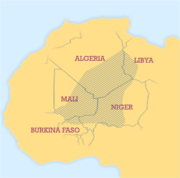
The people of Africa also grew, produced dye, traded, and decorated their garments with indigo. Unlike China and France, consisting of large established groups of working people, Africa was a continent of diverse tribal people.  For example the Touareg people inhabited the Sahara desert shown by the shaded area on the map below. Later this area was divided into the African countries also shown on the map.  The Touareg, a nomadic people were thought to be influenced by Arabs and demonstrated by the practice of wearing  of veils. Unlike Arab women who wear veils it is the Touareg men not the women  covered their  faces with indigo turbans.


Saraha Desert                    (both images from Wikipedia)                       Touareg man from Algeria

The Touareg men of the Sahara were known as "blue men" because of their indigo turbans  called tagelmousts.  The turban was thought to protect them from evil spirits. On a practical note the turbans also protected them from the desert heat and blowing sand. 
The other blue men, who wearing indigo garments, were the Moorish camel traders of Morocco and Mauritania who still don their indigo turbans and robes for festivals. Even in the 17th century indigo dyed garments were quite costly and considered a status symbol. The deeper the blue or the more indigo dye that was used in the dying process also reflected the status of the wearer. 
Indigo blue was known as the national color of Africa. As the production of indigo and the desire to have indigo garments grew, each culture incorporated their own style and decorative techniques to produce unique indigo textiles and clothing.


Thursday, December 17, 2015

Day 17 - Indigo In French Uniform

http://muppin.com/wordpress/wp-content/uploads/2015/11/31-day-blog-challenge-1.jpgImage result for map of france

France, similar to many other countries pursuing the use and profits of indigo, also has a long history to tell. Like China there was a similar  indigo dyed garment, widely adopted by the French working class, called  bleu de travail or the blue work jacket.


Left- the Blue work jacket. (from the vintagecatalogue.com)  Right- workers in their blue work clothes captured in a french impressionist style painting (from the art on manliness.com)

Napoleon also had an influence on the indigo trade.  He wanted blue uniforms for his military which had been dyed with indigo.  In 1806  Napoleon tried to revive the woad dye industry in France and skirt trading with the British East India Company for indigo. Woad was also a blue dye producing  plant that was hard to grow and use commercially. He ordered thousands of acres of woad planted in France  but failed to produce the results he wanted. By 1812 Napoleon abandoned the failed woad industry and lifted the British trade embargo. Blue dyed military uniforms and the indigo trade resumed in France. 
Image result for napoleon images
 Napoleon (from biography.com)

Tuesday, December 15, 2015

Day 15 - Indigo Dyed Textiles used in Japan

Image result for vintage world map
World Map Antique Vintage Old Style Decorative Educational Poster

http://muppin.com/wordpress/wp-content/uploads/2015/11/31-day-blog-challenge-1.jpg                       

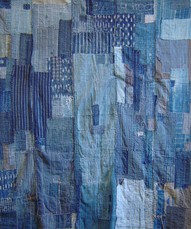
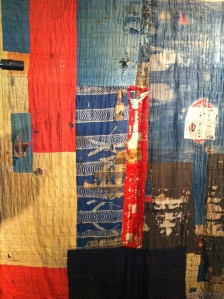
Almost every culture and continent has been touched in some way by the pursuit of making and using indigo. In Japan textiles were scarce. Only elite members of society could afford many silk kimonos. Farmers and peasants relied on indigo dyed cotton for their clothes, bedding, and household items. The ancient Japanese craft of Boro or the layering and stitching of patches of fabric.  Scraps of fabric were used to patch and reinforce worn fabrics repairing clothes, bedding and even diapers. Garments were repaired and reused for generations. The  gentle practice of using the scraps of old indigo fabric to repair their own garments, once worn by their ancestors, was thought to keep their spirits close.  

       colourful boro futon
Boro Futons

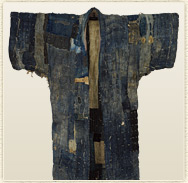
                               Donja, Japanese folk fabric (boro) 
                                                                            Donja

A  Donja is a large sleeping coat that would hold all of the family members huddled inside to keep them warm during cold nights. This protective multi layering of cloth for bedding and coats  to keep warm was also used by firefighters as heavy jackets to protect them from flames.

Monday, December 14, 2015

Day 14 - Indigo & Superstition


http://muppin.com/wordpress/wp-content/uploads/2015/11/31-day-blog-challenge-1.jpg          
                            Image result for indigo vat

       Indigo Dye Vats
The exact moment that the indigo fermentation was complete was difficult to determine. The next step in the process was to drain off the excess liquid leaving behind the indigo sediment.
Many traditions and superstitions surrounded this part of the indigo production. In Japan offerings of rice and plum wine were made to insure a good indigo color. At the Magnolia Mound Plantation in Louisiana the agent in charge of determining the exact time the indigo was ready was said to have used a silver cup. The cup was dipped into the indigo vat and examined for the right color. If the liquid was too green it wasn't ready. A deep blue color was the desired result.  A well trained slave who could determine the right blue color was so prized  for their skill that they were sometimes able earn their freedom. In Egypt the failure of a vat was blamed on women. Menstruating women were not allowed to walk by the dye vats. In China women with flowers in their hair were kept away. Indonesian women were forbidden the use of strong language when harvesting indigo to protect the soul of the plant. When planting indigo in the West Indies an odd number of seeds were planted in each hole. Essentially the success of having a good indigo harvest and good dye vats was an uncertain business. 

Ivory Coast men wearing Adire indigo clothes. From Adire African Textiles